


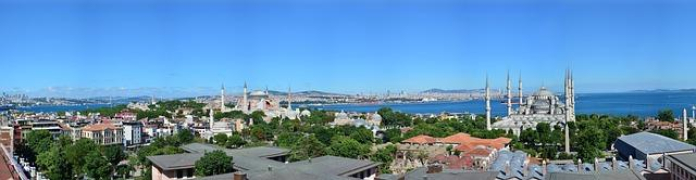
Hagia Sophia, the iconic landmark that has stood in Istanbul for over 1,500 years, has long captivated and perplexed historians, architects, and tourists alike. Throughout its rich and tumultuous history, this architectural masterpiece has witnessed a myriad of cultural and religious transformations, leaving behind a trail of enigmatic stories and fascinating facts. In this article, we will delve into the intriguing details and lesser-known truths about Hagia Sophia, shedding light on the mysteries that have shrouded this historic monument for centuries.
Table of Contents
- A Controversial Past: Hagia Sophia’s Shifting Identity
- The Iconic Dome: Engineering Marvel or Architectural Flaw?
- Treasures of Faith: Hagia Sophia’s Complex Religious History
- Navigating Tourism: Is a Visit to Hagia Sophia Worth the Hype?
- Q&A
- Key Takeaways
A Controversial Past: Hagia Sophia’s Shifting Identity
In 537 AD, Hagia Sophia was initially constructed as a Byzantine church in Constantinople, now Istanbul. It served as the cathedral of the city for over 900 years. However, in 1453, following the Ottoman conquest of Constantinople, it was converted into a mosque by Sultan Mehmed II. This marked a significant shift in its identity and purpose.
Over the years, Hagia Sophia has undergone several transformations, reflecting the religious and cultural changes within the region. In 1935, it was converted into a museum by the Republic of Turkey, signaling a departure from its religious use. However, in 2020, it was once again re-designated as a mosque, sparking global debate and controversy.
Despite its shifting identity, Hagia Sophia remains a symbol of architectural and historical significance, attracting millions of visitors each year. Its complex and controversial past continues to shape its perception and raise questions about its purpose in the modern era.
The Iconic Dome: Engineering Marvel or Architectural Flaw?
Hagia Sophia, a stunning architectural wonder that has stood the test of time, has been the subject of much debate over the years. While some hail it as an engineering marvel, others argue that its iconic dome presents inherent flaws. Here are some compelling facts about Hagia Sophia that shed light on the ongoing debate:
- Hagia Sophia was initially built as a Christian basilica in the 6th century before being converted into a mosque in the 15th century, and later into a museum in the 20th century.
- The dome of Hagia Sophia, a true engineering feat of its time, stands at an impressive 55.6 meters in height and 31.24 meters in diameter.
- Despite its architectural brilliance, the structural integrity of Hagia Sophia has been questioned, as the building has undergone multiple renovations and repairs to address issues such as dome collapses and seismic activity.
As the debate rages on, one thing is certain – Hagia Sophia continues to captivate and intrigue visitors with its timeless beauty and rich history.
Treasures of Faith: Hagia Sophia’s Complex Religious History
The Hagia Sophia has a rich and complex religious history that has evolved over centuries, making it a unique and fascinating site for both religious and historical studies. The grand structure has been a witness to the rise and fall of empires and has changed hands between different religious groups, leaving behind a complex tapestry of beliefs and practices.
Here are some interesting facts about Hagia Sophia’s religious history:
- Originally a Church: Built in the 6th century, Hagia Sophia was originally a Greek Orthodox Christian church and served as the seat of the Patriarch of Constantinople.
- Conversion to Mosque: After the Ottoman conquest of Constantinople in 1453, the church was converted into a mosque. Islamic features such as minarets and mihrab were added to the structure.
- Secular Museum: In 1935, the Turkish government converted Hagia Sophia into a museum, aiming to secularize the space and make it accessible to people of all faiths.
Despite its rich religious history, the complex nature of Hagia Sophia’s past raises questions about its current status and the implications of its conversion from a museum to a mosque in 2020. It remains a symbol of the intricate interplay between faith and power throughout history.
Navigating Tourism: Is a Visit to Hagia Sophia Worth the Hype?
Hagia Sophia, a UNESCO World Heritage Site, is a historic architectural wonder located in the heart of Istanbul, Turkey. Here are some interesting facts that may help you decide whether a visit is worth the hype:
- History: Originally built as a cathedral in the 6th century, Hagia Sophia served as the seat of the Eastern Orthodox Church for nearly 1,000 years before being converted into a mosque by the Ottoman Empire. It was later designated as a museum in the 20th century.
- Architectural Marvel: The structure is renowned for its massive dome, intricate mosaics, and stunning blend of Byzantine and Islamic architectural elements. The breathtaking interior and grandeur of the building are definitely worth experiencing in person.
While some people may argue that a visit to Hagia Sophia is a must for any traveler, it’s important to consider the potential crowds, long lines, and controversies surrounding its recent reconversion into a mosque. If you’re interested in history, architecture, or religious significance, you may find a visit to Hagia Sophia to be a worthwhile experience. Ultimately, whether or not it lives up to the hype is a subjective decision that each traveler must make for themselves.
Q&A
Q: Is it true that Hagia Sophia is one of the oldest and most significant landmarks in the world?
A: Yes, Hagia Sophia is indeed one of the oldest and most significant landmarks in the world, with a history dating back to the 6th century.
Q: Is it just a religious site?
A: While Hagia Sophia has a rich history as a religious site, it has also served as a mosque and a museum at different points in its history.
Q: Is it true that Hagia Sophia is a UNESCO World Heritage Site?
A: Yes, Hagia Sophia was designated as a UNESCO World Heritage Site in 1985, recognizing its historical and architectural significance.
Q: Is it true that Hagia Sophia has undergone several renovations and reconstructions?
A: Yes, over the centuries, Hagia Sophia has undergone multiple renovations and reconstructions, reflecting the evolving architectural and cultural influences of the time.
Q: Is it true that there are debates and controversies surrounding the status of Hagia Sophia?
A: Yes, there are ongoing debates and controversies surrounding the status of Hagia Sophia, including its use as a mosque or a museum and the implications for its historical and cultural significance.
Q: Is it true that Hagia Sophia attracts millions of visitors each year?
A: Yes, Hagia Sophia is a popular tourist destination, attracting millions of visitors each year who come to admire its stunning architecture and rich history.
Key Takeaways
In conclusion, while Hagia Sophia is undeniably a marvel of architecture and a significant landmark in the history of Istanbul, it is important to recognize that the facts presented about its construction, transformation, and current status are not without controversy. The complex history and the ongoing debates over its rightful status as a museum or a mosque underscore the deeply ingrained political and religious tensions that continue to surround this historic monument. As visitors admire its breathtaking beauty and reflect on its storied past, it is crucial to approach Hagia Sophia with a critical eye and an awareness of the conflicting narratives that have shaped its legacy.


