


Unearthing the tomb of the boy pharaoh Tutankhamun in 1922 was a momentous archaeological discovery that captivated the world. The treasure trove of ancient artifacts provided precious insights into the life and culture of ancient Egypt, but one burning question remained unanswered: what did Tutankhamun actually look like? With the aid of modern technology and the meticulous study of historical evidence, researchers have been able to piece together a picture of the legendary ruler’s appearance, shedding light on the face of a long-lost civilization.
Table of Contents
- Unveiling the Pharaoh: Exploring Tutankhamun’s Appearance
- Unraveling the Mystery: Deciphering Tutankhamun’s Facial Features
- Closer Look: Analyzing Tutankhamun’s Physical Characteristics
- From Artifacts to Reconstruction: Recreating Tutankhamun’s Likeness
- Revealing the True Face of Tutankhamun: New Insights and Revelations
- Q&A
- In Conclusion
Unveiling the Pharaoh: Exploring Tutankhamun’s Appearance
During his reign, Tutankhamun was a figure shrouded in mystery, with limited information available about his physical appearance. However, recent advancements in technology and archaeological discoveries have provided us with some insight into what this ancient Egyptian pharaoh may have looked like.
One of the most significant findings came in 2005 when a team of researchers used CT scans to create a digital model of Tutankhamun’s skull. This revealed that he had a slightly elongated head, a prominent overbite, and a cleft palate. Additionally, DNA analysis has suggested that he had a slender build and likely suffered from several genetic disorders, including a club foot.
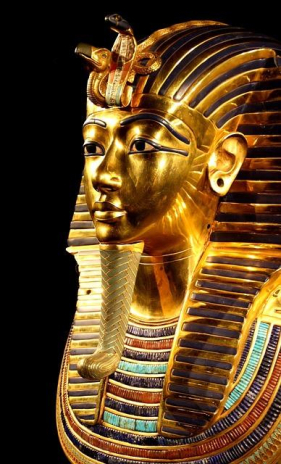
Moreover, artifacts found in Tutankhamun’s tomb, such as his elaborate burial mask and ornate sarcophagus, provide further clues about his appearance. These artifacts depict a youthful and regal figure with distinctive features, including almond-shaped eyes, full lips, and a prominent nose. It is believed that Tutankhamun may have had a slender face and a slightly feminine appearance, in line with the artistic conventions of the time.
It’s important to note that these reconstructions are based on the available evidence and are subject to interpretation. Nevertheless, they offer a fascinating glimpse into the physical attributes of one of ancient Egypt’s most enigmatic rulers.
Unraveling the Mystery: Deciphering Tutankhamun’s Facial Features
For decades, the face of Tutankhamun, the boy king of ancient Egypt, has been a subject of mystery and fascination. With the help of modern technology and forensic techniques, scientists and archaeologists have been able to piece together a more accurate depiction of what Tutankhamun may have looked like.
Through the use of CT scans and 3D imaging, experts have been able to reconstruct the facial features of Tutankhamun. The results have revealed fascinating details about his appearance, shedding light on the physical traits of the young pharaoh. Here are some of the key findings:
- Facial Structure: The reconstruction of Tutankhamun’s face has provided insights into his facial structure, including the shape of his skull, jawline, and cheekbones.
- Physical Characteristics: Analysis of the facial features suggests that Tutankhamun had a prominent nose, full lips, and almond-shaped eyes, reflecting the typical traits of ancient Egyptian royalty.
- Family Resemblance: Comparisons with the facial features of other members of the royal family indicate a strong familial resemblance, further confirming the identity of the iconic pharaoh.
Closer Look: Analyzing Tutankhamun’s Physical Characteristics
One of the most intriguing aspects of ancient history is the physical appearance of prominent figures. In the case of Tutankhamun, the boy king of ancient Egypt, his physical characteristics have been a subject of much debate and fascination. Through the study of his mummy and historical records, we can gain a closer look at what Tutankhamun may have looked like.
When analyzing Tutankhamun’s physical characteristics, researchers have found several key details that provide insight into his appearance:
- Cranial Structure: Studies of Tutankhamun’s skull suggest that he had a slightly elongated head, a common trait among members of the Egyptian royal family due to selective breeding among the ruling elite.
- Facial Features: Facial reconstructions of Tutankhamun based on his mummy reveal a slim, youthful face with a prominent jawline and large, almond-shaped eyes. His lips are depicted as full and well-defined, characteristics that were considered desirable in ancient Egyptian beauty standards.
- Height and Build: Examination of Tutankhamun’s mummy indicates that he was of average height for his time, standing at around 5 feet 6 inches. Additionally, his skeletal remains suggest that he had a slender build, consistent with the lifestyle of a young pharaoh.
From Artifacts to Reconstruction: Recreating Tutankhamun’s Likeness
In the world of ancient Egypt, few figures loom larger than the boy king Tutankhamun. Despite his short reign, his tomb has been one of the most significant archaeological finds in history. For decades, scholars have studied the artifacts and treasures found within the tomb, seeking clues about what the young pharaoh may have looked like. Now, thanks to modern technology, we are able to get a glimpse of Tutankhamun’s likeness.
Using state-of-the-art 3D scanning and virtual modeling techniques, experts have been able to recreate a lifelike image of King Tut. This groundbreaking process has allowed us to see the boy king as he may have appeared in life, with startling detail and accuracy. By examining the artifacts found in his tomb and using cutting-edge forensic science, researchers have been able to piece together a portrait of Tutankhamun that is truly remarkable. From his distinctive features to the regal adornments he would have worn, this recreation gives us a new perspective on the famous pharaoh.
Revealing the True Face of Tutankhamun: New Insights and Revelations
Recent scientific advancements have shed new light on the appearance of the famous Egyptian pharaoh Tutankhamun. Through various studies and examinations, experts have gained valuable insights into the physical characteristics of this iconic figure from ancient history.
One of the most significant revelations is the use of CT scans to create a 3D model of Tutankhamun’s face. This has allowed researchers to digitally reconstruct his facial features, providing a glimpse into what the young ruler may have looked like over 3,000 years ago. Additionally, DNA analysis has provided clues about his lineage and potential genetic traits.
Furthermore, the examination of Tutankhamun’s mummy has provided valuable information about his health and possible physical disabilities. By analyzing his skeletal remains, researchers have been able to uncover details about his stature, possible ailments, and any physical abnormalities. All of these findings have contributed to a more complete understanding of the true face of Tutankhamun, offering a fascinating and realistic portrayal of the ancient pharaoh.
Q&A
Q: What did Tutankhamun look like?
A: Despite dying over 3,300 years ago, historians and archaeologists have been able to piece together a fairly accurate image of what the famous pharaoh Tutankhamun looked like.
Q: How have they determined his appearance?
A: Through the use of advanced scanning technology, scientists have been able to create digital reconstructions of Tutankhamun’s face based on the dimensions of his skull. Additionally, detailed descriptions from ancient texts and the discovery of his well-preserved mummy have provided valuable insight.
Q: What do these reconstructions reveal?
A: The reconstructions depict a young man with a slight build, a prominent jawline, and a narrow face. He is believed to have had a slightly elongated head, a trait that was common among the Egyptian royal family.
Q: What about his features?
A: Tutankhamun is thought to have had a small, slightly hooked nose, full lips, and almond-shaped eyes. His eyebrows were likely thin and arched, while his chin and cheeks were described as being smooth and rounded.
Q: Did he have any discernible physical characteristics?
A: It is believed that Tutankhamun may have had a club foot, as evidenced by the discovery of numerous walking sticks and canes in his tomb. Additionally, his mummy showed signs of a broken leg, which may have contributed to his physical limitations.
Q: Overall, what can we conclude about his appearance?
A: While the exact details of Tutankhamun’s appearance may never be fully known, the combination of scientific analysis and historical evidence has given us a compelling glimpse into the physical features of this ancient Egyptian ruler.
In Conclusion
In conclusion, the mystery of Tutankhamun’s appearance may never be fully unraveled, but the artifacts and scientific research mentioned in this article provide valuable insights into the physical appearance of the legendary pharaoh. While we may never have a definitive answer to the question of what Tutankhamun looked like, ongoing research and technological advances continue to shed light on his enigmatic persona and legacy in ancient Egyptian history. As new discoveries emerge and our understanding of ancient Egypt grows, we may come closer to picturing the face of the boy king who continues to capture the world’s imagination.


