


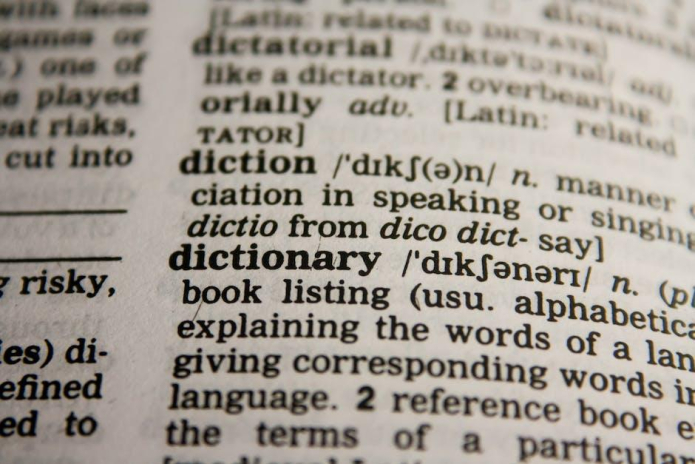
Hey there, ever come across a word and think to yourself, “how on earth do you pronounce this?” We’ve all been there. In this article, we’ll dive into some of the most confusing and hard-to-guess words in the English language. So, grab a cup of coffee and get ready to expand your vocabulary!
Table of Contents
- Tricky Words in the English Language
- Commonly Misunderstood Vocabulary
- Difficult Words to Pronounce and Understand
- Frequently Confused and Misinterpreted Terms
- Tips for Mastering Complex Vocabulary
- Q&A
- The Conclusion
Tricky Words in the English Language
can often leave even the most fluent speakers scratching their heads. These words are notorious for their confusing spellings, pronunciations, and meanings, making them a real challenge to guess. Here are some of the most difficult words in English that might leave you stumped:
1. Queue – This word might look simple, but its pronunciation as “kyoo” can catch many people off guard.
2. Pronunciation – The irony of this word is that it is often mispronounced as “pro-nounce-ee-a-shun.”
3. Colonel – Despite the spelling, this word is actually pronounced as “kernal,” leaving many English learners puzzled.
With their unexpected spellings and pronunciations, these tricky words can be a stumbling block for language learners and native speakers alike. Take your time to master these words and you’ll be well on your way to becoming a wordsmith in the English language!
Commonly Misunderstood Vocabulary
Antidisestablishmentarianism: This word is often cited as one of the longest words in the English language, and it refers to the opposition to the withdrawal of state support from an established church. Many people mistakenly believe this word is related to the dismantling of governmental institutions, but its actual meaning is more specific.
Supercalifragilisticexpialidocious: Made famous by the 1964 movie “Mary Poppins,” this whimsical-sounding word is actually a nonsensical term used to express delight or a sense of wonder. Despite its playful nature, many people struggle to understand its meaning due to its length and unusual structure.
Sesquipedalian: This word describes someone who tends to use long words and speaks in a verbose manner. It’s a term often used in the study of linguistics, but its uncommon usage may lead to misunderstandings among those who encounter it for the first time. It’s important to remember that sesquipedalian is not an insult, but rather a neutral descriptor of someone’s language patterns.
Difficult Words to Pronounce and Understand
English is a tricky language, and some words can be particularly difficult to pronounce and understand. Whether it’s due to their complex spelling, unique pronunciation, or obscure origins, these words can trip up even the most seasoned English speakers. If you’ve ever struggled with these tongue twisters, you’re not alone. Here are some of the most in the English language:
- Entrepreneur – This word is notorious for its tricky spelling and pronunciation. Many people mistakenly pronounce it as “en-tre-pre-new-er”, but the correct pronunciation is “ahn-truh-pruh-nur”.
- Colonel – The spelling of this word can be deceiving, as it looks like it should be pronounced phonetically. However, the correct pronunciation is “kernel”.
- Choir – Despite its simple appearance, the pronunciation of this word can throw people off. It is pronounced “kw-eye-uh”.
These are just a few examples of the many difficult words in the English language. Whether you’re a native speaker or learning English as a second language, mastering these tricky words can be a challenging but rewarding endeavor.
Frequently Confused and Misinterpreted Terms
When it comes to language, there are often words that sound similar or have slight variations in spelling that can lead to confusion and misinterpretation. It’s important to understand the nuances of these terms to communicate effectively. Here are a few that can be hard to guess for some people:
Lose vs. Loose: These two words are often mixed up because of their similar pronunciation. “Lose” is a verb that means to be deprived of or to fail to win. On the other hand, “loose” is an adjective that describes something not tightly fitted or bound.
Affect vs. Effect: Many people struggle with when to use “affect” and when to use “effect.” “Affect” is typically used as a verb to indicate influence or produce a change. “Effect,” on the other hand, is usually used as a noun to denote the result or outcome of an action or event.
Principal vs. Principle: These two words are often confused due to their close spelling. “Principal” refers to a person of authority, such as the head of a school. “Principle,” on the other hand, refers to a fundamental truth or belief.
Understanding the differences between these commonly confused terms can help improve overall communication and avoid misunderstandings. Take the time to familiarize yourself with these distinctions to enhance your language skills and ensure clarity in your writing and speaking.
Tips for Mastering Complex Vocabulary
Expanding your vocabulary can be a challenging but rewarding endeavor. Complex vocabulary often consists of hard words to guess, making it even more difficult to master. However, with the right approach and consistent practice, you can improve your understanding and use of challenging words. Here are a few tips to help you master complex vocabulary:
- Read extensively: One of the best ways to learn new words is by exposing yourself to a wide range of literature. Reading extensively allows you to encounter unfamiliar words in different contexts, helping you understand their meaning and usage.
- Use context clues: When you come across a difficult word, pay attention to the surrounding text. Context clues, such as the tone of the passage or the words that come before and after the unfamiliar word, can often help you decipher its meaning.
- Practice actively: Regularly incorporating new words into your writing and conversation can reinforce your understanding and retention of complex vocabulary. Actively using the words you learn will help engrain them into your memory.
By implementing these tips, you can make significant strides in mastering complex vocabulary and expanding your language skills.
Q&A
Q: Why are some words hard to guess?
A: Some words are hard to guess because they may be uncommon, have irregular spelling, or come from a different language.
Q: What are some examples of hard-to-guess words?
A: Words like “onomatopoeia,” “sesquipedalian,” and “antidisestablishmentarianism” are often cited as difficult to guess.
Q: How can I improve my ability to guess hard words?
A: Reading extensively, consulting a dictionary, and practicing spelling can all help improve your ability to guess hard words.
Q: Are there any strategies for guessing the meanings of unfamiliar words?
A: Breaking down the word into smaller parts, looking for context clues, and considering related words can all be helpful strategies for guessing the meanings of unfamiliar words.
Q: Why is it important to be able to guess the meanings of hard words?
A: Being able to guess the meanings of hard words can improve reading comprehension, enhance communication skills, and broaden your vocabulary.
The Conclusion
Well, there you have it! Trying to guess these hard words can definitely be a challenge, but with a little practice and exposure, you’ll soon become a master at guessing tricky words. Keep expanding your vocabulary and you’ll be able to tackle any word that comes your way. Happy guessing!


