


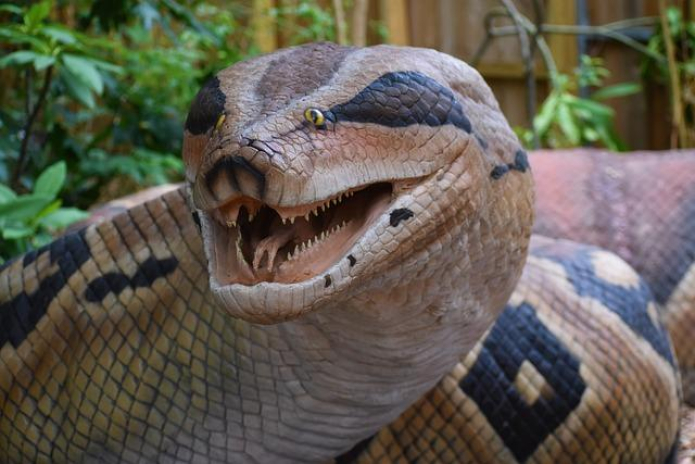
In the annals of prehistoric creatures, few strike fear and awe quite like the Titanoboa. This colossal serpent, which roamed the Earth over 60 million years ago, stands as one of the largest snakes to have ever slithered across the planet. But just how big was the Titanoboa? Join us as we delve into the astounding dimensions of this ancient behemoth and uncover the true magnitude of this impressive reptile.
Table of Contents
- Fossil Discovery: Uncovering the Titanoboa’s Massive Size
- Comparing the Titanoboa to Modern-Day Snakes: Understanding its Scale
- Implications of the Titanoboa’s Size on the Prehistoric Ecosystem
- Protecting the Legacy of the Titanoboa: Preserving Fossils for Future Generations
- Q&A
- In Conclusion
Fossil Discovery: Uncovering the Titanoboa’s Massive Size
When it comes to prehistoric creatures, few can match the sheer size and power of the Titanoboa. Discovered in the coal mines of Cerrejón, Colombia, this ancient serpent is estimated to have lived around 58-60 million years ago and is the largest snake ever recorded in history. The Titanoboa’s massive size has fascinated scientists and researchers for decades, and recent fossil discovery has shed even more light on just how big this serpent truly was.
The enormous size of the Titanoboa can be truly mind-boggling, with some estimates suggesting that it could reach lengths of up to 42 feet and weigh as much as 2,500 pounds. To put this into perspective, that’s longer than a standard school bus and as heavy as a small car. Its sheer size and power give us a glimpse into the world of prehistoric creatures and the natural environment they thrived in. The discovery of the Titanoboa’s massive size has not only expanded our understanding of prehistoric wildlife but also provides valuable insights into the ecological dynamics of ancient ecosystems.
Comparing the Titanoboa to Modern-Day Snakes: Understanding its Scale
Titanoboa, the ancient snake that roamed the earth over 60 million years ago, has captured the imagination of scientists and enthusiasts alike. Measuring up to 42 feet long and weighing as much as 2,500 pounds, this monstrous serpent was truly a sight to behold. To put its size into perspective, let’s compare the Titanoboa to modern-day snakes and understand the scale of this incredible creature.
Modern-day anacondas, the closest living relative to the Titanoboa, can grow up to 29 feet long and weigh around 550 pounds. While still massive by today’s standards, they pale in comparison to the sheer size of the Titanoboa. Even the largest recorded snake in captivity, a reticulated python named Medusa, measures just over 25 feet long, making it smaller than the Titanoboa.
When we compare the size of the Titanoboa to other well-known snake species, such as the Burmese python and the green anaconda, it becomes evident just how colossal this prehistoric predator truly was. With its massive girth and incredible length, the Titanoboa was a formidable apex predator in its time, ruling the ancient swamps and forests with its imposing presence.
Implications of the Titanoboa’s Size on the Prehistoric Ecosystem
One of the most fascinating creatures to have ever roamed the Earth is the Titanoboa, a massive snake that lived during the Paleocene epoch, approximately 60-58 million years ago. Measuring an estimated 42 feet in length and weighing around 2,500 pounds, the Titanoboa holds the title for the largest snake to have ever existed. Its colossal size had significant implications on the prehistoric ecosystem, influencing various aspects of the environment and the creatures within it.
The immense size of the Titanoboa undoubtedly had a profound impact on the prehistoric ecosystem, shaping the dynamics of the food chain and the behavior of other creatures. Some of the key include:
- Top Predator: The Titanoboa’s size and predatory nature would have made it the apex predator in its environment, exerting significant influence on other species and potentially contributing to the regulation of population sizes within the ecosystem.
- Adaptations of Prey: The presence of such a massive predator would have likely driven the evolution of various prey species, leading to adaptations in size, behavior, and defense mechanisms in order to survive in a world where the Titanoboa lurked.
- Environmental Impact: The existence of such a large predator would have influenced the distribution and behavior of other species, potentially shaping the landscape and ecosystem dynamics in ways that are still being studied and understood by scientists.
Overall, the size of the Titanoboa had far-reaching implications on the prehistoric ecosystem, playing a crucial role in the ecological balance and the evolution of the creatures that inhabited that ancient world.
Protecting the Legacy of the Titanoboa: Preserving Fossils for Future Generations
The Titanoboa is known as one of the largest snakes to have ever existed, with fossil evidence suggesting that it could reach lengths of up to 42 feet long. This ancient serpent roamed the swamps of present-day Colombia around 60 million years ago, during the Paleocene epoch. Its sheer size and incredible strength have captivated the imaginations of researchers and enthusiasts alike, leading to continued efforts to uncover and preserve its fossilized remains. The Titanoboa’s immense size served as a key factor in understanding the evolutionary history of snakes and their place in the prehistoric ecosystem.
Preserving the legacy of the Titanoboa involves meticulous excavation and handling of its fossils to ensure their integrity and longevity. With the ongoing threat of natural erosion and human interference, safeguarding these artifacts is critical for maintaining a comprehensive understanding of this iconic species. The delicate process of preparing and storing these fossils requires specialized techniques and dedicated resources to protect them for future generations to study and appreciate. By prioritizing the conservation of Titanoboa fossils, scientists and researchers aim to unlock further insights into the ancient world and its inhabitants, shedding light on the remarkable biodiversity that once thrived on Earth.
Overall, the efforts to protect the legacy of the Titanoboa serve as a testament to the importance of preserving our natural history. By safeguarding these extraordinary fossils, we can continue to unravel the mysteries of the past and gain a deeper appreciation for the world that existed long before our time. In doing so, we bridge the gap between the ancient and modern world, inspiring curiosity, and awe for the wonders of evolution.
Q&A
Q: How big was the Titanoboa?
A: The Titanoboa was the largest snake to have ever lived, with estimated lengths of 42 to 49 feet and a weight of around 2,500 pounds.
Q: When did the Titanoboa exist?
A: The Titanoboa lived during the Paleocene epoch, approximately 60 million years ago.
Q: Where was the Titanoboa discovered?
A: Fossils of the Titanoboa were discovered in a coal mine in La Guajira, Colombia.
Q: What was the significance of the discovery of the Titanoboa?
A: The discovery of the Titanoboa provided important insights into the ancient ecosystem and the potential size and behavior of prehistoric reptiles.
Q: What did the Titanoboa eat?
A: Based on its size and the environment in which it lived, it is believed that the Titanoboa primarily fed on large mammals and other reptiles.
Q: How did the Titanoboa compare to modern-day snakes?
A: The Titanoboa was significantly larger than any modern-day snake, with the largest living snake, the green anaconda, reaching lengths of up to 30 feet.
Q: Are there any replicas or displays of the Titanoboa for public viewing?
A: Yes, some natural history museums have recreated the Titanoboa to scale for public viewing, providing a sense of the immense size of this prehistoric snake.
In Conclusion
In conclusion, the Titanoboa was an enormous and awe-inspiring creature that roamed the Earth millions of years ago. With its massive size and powerful capabilities, it is truly a fascinating and terrifying part of our planet’s history. By studying the Titanoboa, scientists have been able to gain valuable insight into the prehistoric world and the incredible diversity of life that once existed. As we continue to uncover more about this ancient giant, we are constantly reminded of the wonders that the natural world has to offer. The Titanoboa will forever remain a captivating and significant part of our planet’s past.


